News
-
3.11.2025

The Working Poor Are on the Rise Across the Nordics
Researchers are looking into how precarious and informal jobs are shaping people’s lives. Is the Nordic welfare state truly equal for everyone who works within it?
Professor Lena Näre at the University of Helsinki leads the research project Managing Precarious and Informal Work in the Nordic Countries, which examines precarious employment in Finland, Sweden, and Norway through in-depth interviews with those directly affected.
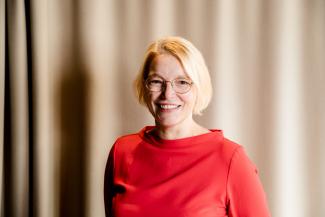
Project leader Lena Näre. Image: Mathias Foster/Future Nordics – We want to understand what precarity means in a Nordic context and how it shapes everyday life in practice, Näre emphasizes.
The project brings together Nordic and interdisciplinary perspectives with a strong focus on concrete realities. The research targets sectors where working conditions often iare nsecure: cleaning, construction, and platform-based work. Migrant workers’ experiences are at the heart of the study, their voices otherwise being frequently absent from official statistics.
– Migrant workers often occupy the most vulnerable positions, which is why it is crucial that their voices are heard, says Näre.
The Rise of the Working Poor
According to Professor Markus Jäntti at Stockholm University, mapping the scope of precarious work and its evolution over time is challenging. The study reveals a clear trend: low-wage employment is increasing across the Nordic region.
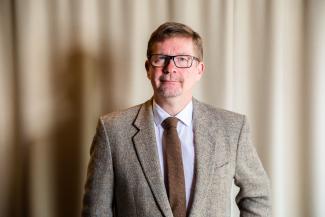
Markus Jäntti. Image: Mathias Foster/Futurenordics – Statistics mainly cover the household population, meaning people with permanent residence permits. But our analyses show that the share of low-paid workers has grown in all Nordic countries, and so has the number of working poor. In the past, it was almost impossible to be poor while working full-time. That reality has changed.
Exploitation in Key Sectors
Interviews uncover severe exploitation in construction, including underpayment, unpaid wages and manipulated working hours. In cleaning, piece-rate systems drive harsher work rhythms and unpaid overtime. Platform work often disguises employment as self-employment, stripping workers of social security and even jeopardizing their ability to renew residence permits.
– These are not isolated cases, they reflect a broader structural problem. We need stronger oversight and a critical review of how residence permit systems create dependency on employers, Näre stresses.
Declining Union Membership
Trade unions remain important but struggle to reach migrant workers.
– Unions do their best, but membership has dropped sharply across the Nordic countries, Näre notes.
In Finland, unionisation fell from 74% in 2000 to below 60% in 2019 – a trend mirrored in Sweden. This decline weakens workers’ bargaining power and increases the risk of exploitation.
Rethinking the Welfare State
In Sweden, new forms of grassroots organizing have emerged, often based on direct democracy—a model researchers believe could strengthen future labor rights.
The project’s findings will be published in international journals and open-access thematic issues. Researchers also plan short videos, columns, and articles to reach a wider audience.– We hope this sparks a debate about what kind of welfare state we want to preserve – and for whom.
For more information, please contact:
Professor Lena Näre, Project Leader
University of Helsinki
lena.nare@helsinki.fi -
26.8.2025

In contemporary European border work, colleagues on the other side become invaluable
In today's Nordic region, borders are both passageways and filters, where work at national crossings has become a tool for patching up ‘the cracks in the external Schengen borders’.
The practical work at the borders and how it is affected by new technology is the focus of the interdisciplinary research project Unpacking the Conventions Between Openness and Security in the Nordic Region: Digital Public Surveillance Practices at Three State Borders. It is led by Elena Raviola, Torsten and Wanja Söderberg Professor of Design Management at the University of Gothenburg.
“National borders have always been political objects that define countries’ jurisdictions. They have been moved through war, annexation or colonisation and politicised with slogans such as ‘strong borders’. But what does this actually mean in an integrated Nordic region?” says Raviola.
The Schengen Agreement's promise of free movement of people, goods and services has meant that border work constantly balances openness against security. The research team has reviewed a large number of documents and reports related to borders in Europe and the Nordic region, brought to the fore by various crises over the past 20 years.
There are many practical issues. In Sweden, the physical borders extend over large areas. Administrative work increases, for example, when railways cross borders, involving different owners and authorities.
Schengen increased border work
Against this backdrop, the long history of Nordic cooperation becomes particularly interesting. Raviola mentions the Nordic Passport Union from the 1950s and the Nordic Council of Ministers' goal of making the region the most integrated in the world by 2030. In parallel with this, the EU is strengthening its external border controls, including requirements for biometric identification of non-Schengen citizens, which is leading to growing European databases.
“The internal borders have become tools for catching what the Schengen border has missed – ‘the cracks in Schengen's external border’, as one informant put it. Border work is being ramped up again after a period of dismantling. This is where new technology comes in, with the hope of being able to monitor borders without closing them,” says Raviola.
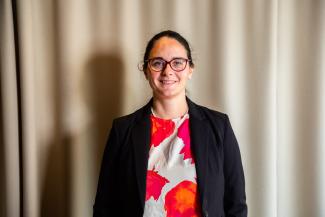
The importance of human cooperation between states came as a surprise to Elena Raviola and her team. Human cooperation at the border was a surprise
Surveillance is difficult to organise in practice. Closing all borders increases the burden on those who have to decide locally who is allowed to pass. The countries' systems differ and information sharing is often bureaucratic and slow.
This makes personal contacts and networks valuable. This is shown by the research group's interviews with officials at the border between Denmark and Sweden and along the 1,630 km long Swedish-Norwegian border – Europe's longest land border. In addition to customs and police, the researchers interviewed airport staff, border committees and other stakeholders.
Elena Raviola says that the discovery of how important human cooperation between states was came as a surprise.
“When border colleagues from different countries work closely together, work routines are created that help them filter and share information more quickly.”
There are several cross-border initiatives. On the Swedish-Norwegian border, the countries share the police station for the municipalities of Eda and Eidskog. Between Sweden and Denmark, a police group rotates between the countries.
Technology records everything – but interprets poorly
Technology also requires interpretation. Number plates can become illegible due to weather conditions or be linked to incorrect data.
A new Swedish law has expanded the powers of the police in certain border areas, including permission for ANPR cameras. For example, they record all vehicle passages and automatically link the data to other databases. This not only extends the boundaries geographically, but also in time, as the information is stored and can be used much later.
The researchers also aimed to explore the politically and ethically charged dimensions of borders through public engagement. In spring 2025, the project partnered with the Röhsska Museum in Gothenburg on an initiative focused on biometric surveillance. The program featured artworks, seminars, and role-playing activities with students. For example, participants were asked to narrate the story of an object encountered at a border crossing
“Rather than pointing fingers, we wanted to use speculative methods to concretise the issues. Crossing the boundaries between art and research opens up new spaces for discussion about the development of society.”
On 23 October, the innovative initiative will continue with the seminar Borders, Bodies and Databases at the IT University of Copenhagen.
For further information, please contact:
Professor Elena Raviola
University of Gothenburg
elena.raviola@gu.se -
14.8.2025
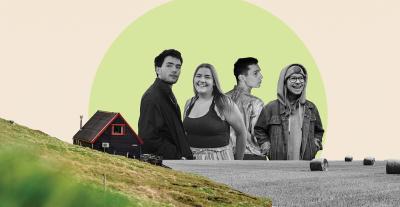
Torn between homesickness and an uncertain future – Nordic youth in rural areas share the same worries
What is it like to grow up in areas where services are disappearing and the future is uncertain? A large-scale research project is exploring Nordic youth's conflicted relationship with their remote hometowns.
A cross-national study in four Nordic Countries has been following young people in rural areas for some time to compare their experiences. The project is part of the Future Challenges in the Nordics research programme.
– The aim is to give a voice to young people living in rural areas. We want to hear what they think about their lives and the day-to-day choices they make. Much more research has been done among city dwellers, so this study clearly focuses on young people in small towns and villages, says Kaisa Vehkalahti, project manager and senior lecturer.
Research data was collected in Finland, Sweden, Norway and Denmark. The interviews have been conducted over a long period of time and the research team has also organised workshops, where the young people involved have been asked to imagine what their home region will look like in 50 years.
– The Nordic young people's experiences of living in remote areas are surprisingly similar, even though rural Finland is different from, for example, Denmark, which is a much more densely populated country. Many share the feeling that there is a negative stigma surrounding their home region, says Vehkalahti.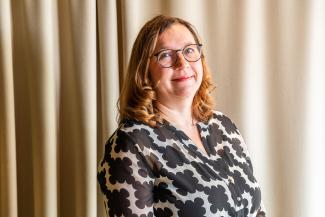
Kaisa Vehkalahti. Foto: Mathias Foster/Futurenordics In Sweden, there are currently expectations of a boost for rural areas due to so-called green growth. But these areas also face the same challenges as elsewhere, such as the withdrawal of services and long journeys to school.
The results of the survey clearly show that the relationship between urban and rural areas is complex and that the lives of young people in rural areas are fragmented between different locations. Decisions to stay or move are complex and influenced by different factors at different times.
– The results of this research are worth considering, for example, when making decisions about rural communication networks or educational opportunities. They have a major impact on how young people view their present and future in their hometown, says Vehkalahti.For more information, please contact
Kaisa Vehkalahti
Lecturer, Department of History and Ethnology
University of Jyväskylä
kaisa.r.vehkalahti@jyu.fi
+358 50 4660826 -
3.4.2025
When green energy visions collide with local interests in the North
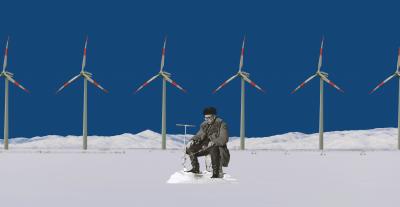
The bankruptcy of battery manufacturer Northvolt has attracted a lot of attention and highlighted the structural challenges that characterise the green transition in northern Sweden. The reasons for the bankruptcy are widely debated, but researchers point out that Northvolt is just one example of a broader pattern in the realisation of the transition – not only in northern Sweden, but also in other peripheral regions around the world.
The northern regions of Sweden, Finland and Greenland have been highlighted in recent years as key areas for Europe's energy transition. The vast areas, the potential to expand renewable energy production and the rich resources of minerals and critical earth elements enable the rapid establishment of battery factories, wind farms and mines.
But the open questions are many: How will the local population be affected, what is the ownership structure of the companies that set up shop, where do the profits go, and who is responsible for investments that do not turn out to be profitable?
A process driven from the outside
The current perception of peripheral regions is driven by global agendas, international investors and national strategies. Often, local politicians also enthusiastically welcome large industrial ventures, as alternatives for community development are few.
– Our research shows that the green transition in these areas is largely shaped by decisions made far away, where local people are rarely given the opportunity to have a real say.
This is according to Professor Erland Mårald, project leader of the Future Challenges in the Nordics project Peripheral Visions: When Global Agendas meet Nordic Energy Peripheries, which studies the energy transition in Greenland, northern Sweden and northern Finland.
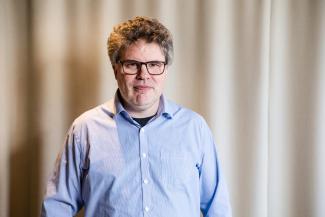
Erland Mårald. Image: Mathias Foster/Futurenordics According to Mårald, the role of local people is in practice reduced to either accepting or rejecting pre-formulated plans, without genuine dialogue on how the transition can be sustainable and fair for those living and working in the region.
– When objections arise, they are seen as obstacles to be dealt with, rather than voices to be listened to. The way the green transition is currently being implemented, it risks leading to increased polarisation and exploitation in the areas where industrial investments are taking place, instead of the sustainable development that is sought, says Mårald.
– An inclusive approach is crucial to ensure that the green transition is not only sustainable and fair, but also builds mutual trust and acts as a long-term force for community building.
Winners and losers
In its current form, the green transition creates clear winners and losers. While places like Skellefteå and Boden in Sweden can benefit from risky start-ups and economic growth, other parts of the same region are turning into pure resource providers. Here, wind farms and mines are being built without corresponding community-building efforts, such as schools, healthcare and shops.
– This not only reinforces historical patterns of exploitation, where the periphery serves national and international centres, but also creates divisions within the regions concerned, says Mårald.
The imbalance is exacerbated by what is known as ‘green colonialism’, a situation where industrial energy transition takes place at the expense of existing land use and local economies. In northern Sweden, Finland and Greenland, industries such as reindeer herding, fishing and tourism are being displaced by large-scale industrial projects. The result, according to the researchers, is increased conflict, eroded trust and a breeding ground for counter-movements and populism.

Janina Priebe. Image: Mathias Foster/Futurenordics – The transition can only be successful if green ambitions have local counterparts, shaped by local knowledge and experience. Top-down decisions need to be locally anchored, says project researcher Janina Priebe, who has specifically studied Greenland.
More information:
Professor Erland Mårald
Umeå University
erland.marald@umu.se
+4690 786 65 45Associate Professor Janina Priebe
Umeå University
janina.priebe@umu.se -
14.1.2025

Does news media stereotype immigrants?
Research project helps journalists identify prejudices associated with immigrants.
The Future Challenges in the Nordics research project “Ethnic Stereotypes Over Time - a Nordic Comparison” examines how different groups of foreign-born people have been portrayed in Swedish and Finnish news media over time. Which stereotypes are constant and which are changing, and why is this so?
The research material consists of newspapers published in Sweden and Finland between 1955 and 2020. Machine learning software has been developed specifically for the purpose of searching through the large data set and identifying news articles about foreign-born people from, for example, the former Yugoslavia, Iran, Iraq, Somalia, Vietnam and Chile. Words associated with the different groups are compared with words associated with the words ‘Swedes’ or ‘Finns’, and in this way the specific stereotypes for each group are filtered out.
“There will be both expected and surprising results. We also expect some differences between the Finnish and Swedish newspapers”, says Moa Bursell, project manager and head of research at the Institute for Futures Studies in Stockholm.
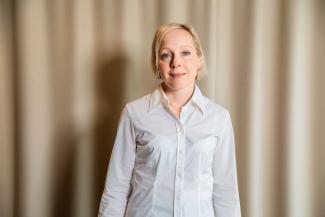
Moa Bursell. Image: Mathias Foster/Futurenordics Better understanding of stereotypes can improve journalism
The results of the research are expected to be of particular benefit to research into how ethnic stereotypes arise and change. But they may also be useful in journalism education, for example.
“Not because the project identifies journalism as responsible for the spread and maintenance of ethnic stereotypes. Journalism reflects the society and the times in which it operates. But at the same time, journalism is opinion-forming and needs to reflect on how it reports on vulnerable groups. For example, in what contexts is it necessary to mention nationality”, says Bursell.
When the final research results are published later this year, researchers will have to consider several ethically sensitive issues.
“Just as news media risk contributing to the perpetuation of stereotypes, our project risks doing the same. Talking about how groups are viewed can reinforce stereotypes instead of countering them. We hope that the project's findings will lead to a greater understanding of stereotypes as social, changing constructs that have more to do with the society that views the new groups, than with the groups themselves.”
More information about the project:
Moa Bursell, Associate Professor of Sociology and Research Leader
moa.bursell@iffs.se
Institute for Futures Studies -
31.10.2024

Residents enjoy living in areas with a bad reputation better than expected
An extensive interview study in Sweden, Finland and Denmark gives a voice to residents of disadvantaged neighbourhoods.
In the Future Challenges in the Nordics research project ”The Future of Diverse and Disadvantaged Neighbourhoods in the Nordic Welfare States — The Voices of Residents”, researchers from four Nordic universities are studying six neighbourhoods with a bad reputation in Finland, Sweden and Denmark. In Helsinki and Vantaa in Finland, Kontula and Koivukylä are studied, in Gothenburg in Sweden, Biskopsgården and Hammarkullen are studied, and in Aarhus in Denmark, Herredsvang and Gellerup are studied. All neighbourhoods are associated with at least some negative perceptions and the proportion of immigrants is higher than average in the studied cities.
The researchers are interviewing a total of around 4 800 people whose voices are not usually heard in public debate. The interviews focus on how residents perceive their neighbourhood, how they feel about it, how they relate to society in general, and whether they experience discrimination because of where they live.
“Disadvantaged areas are a highly politicised topic, especially in Sweden and Denmark,” says Peter Esaiasson, Professor in Political Science at the University of Gothenburg, who is leading the research project.
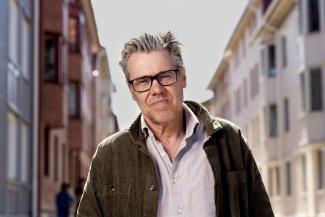
Peter Esaiasson. Image: Johan Wingborg/University of Gothenburg The research is based on extensive and long-term fieldwork, which has given the researchers a diverse picture of the areas and the residents. Interviews have been conducted both in residents' homes and in public places.
“It has been surprisingly easy to find interviewees and the fieldwork has also allowed us to reach the less educated population more than usual. The interview guide has been translated into Russian, Somali, Arabic, Swedish, Finnish, Danish and English. Sometimes family members or neighbours have acted as interpreters if the interviewer and the interviewee did not have a common language,” says Esaisson.
Residents are satisfied
The preliminary results of the research show that residents' trust in the community is not significantly lower in the surveyed neighbourhoods compared to other areas. However, many people are bothered by the stigmatisation of the neighbourhoods.
“In general, people enjoy living in the surveyed neighbourhoods, especially if they belong to the majority group. Many people know that the neighbourhood has a bad reputation, but this does not correspond to their own experiences as residents,” says Esaiasson.
There are both similarities and differences among the areas surveyed. In Finland, the areas do not differ as much from other neighbourhoods as in Denmark and Sweden.
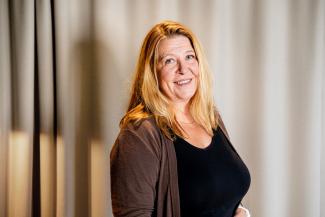
Mari Vaattovaara. Image: Mathias Foster/Futurenordics “In Kontula and Koivukylä, trust in society and authorities was high and did not differ much from the national average,” says Mari Vaattovaara, Professor in Urban Geography at the University of Helsinki.
The final results of the project will be published in 2026.
More information:
Professor Peter Esaiasson
University of Gothenburg
peter.esaiasson@pol.gu.se
+46 31 786 12 22
+46 733 52 36 12
Mari Vaattovaara
University of Helsinki
mari.vaattovaara@helsinki.fi
+358 50 415 4861