News
-
8.10.2026

Research: Tax Deduction for Domestic Services Has Created a Cleaning Market That Exploits Vulnerable Migrants
Research shows that the Swedish tax deduction scheme for domestic services (RUT), combined with a disposable migrant workforce, has created opportunities for ruthless exploitation and weakened the influence of workers and trade unions in the workplace.
According to the industry organization for the service industry Almega, the commercialisation of cleaning services serves both as a tool for integration and as a way for the growing middle class to manage the demands of everyday life. However, research conducted at Lund University and Malmö University shows that the RUT system also contributes to an unregulated and largely invisible labour market that places migrant workers, particularly women, in a vulnerable position.
“Based on our research findings, we are critical of the RUT reform. Domestic cleaning has grown enormously since the introduction of the tax deduction in 2007, and the question is whether the state should be supporting an industry that is so difficult to regulate and that enables the exploitation of labour,” says Rasmus Ahlstrand, researcher at Lund University.
Together with fellow researcher Sara Eldén, Professor of Sociology at Malmö University, he argues that the tax deduction for household services forms part of a broader transformation of the labour market: employers have strengthened their position at the expense of workers.
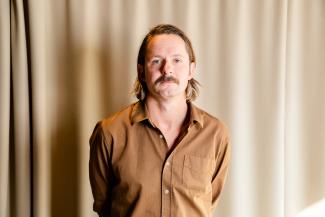
Rasmus Ahlstrand. Photo: Mathias Foster/SLS A key factor in this development is the reform of labour immigration rules that followed shortly after the introduction of the RUT deduction. The new regulations made it possible for Swedish companies to recruit workers directly from countries outside the European Union.
“This has given Swedish companies access to a pool of labour that is cheaper and more readily available than the domestic workforce, weakening the bargaining position of trade unions.”
Fear of Deportation
Ahlstrand and Eldén have conducted participant observation and interviewed workers in the cleaning industry.
“Migrant workers whose residence permits are tied to a specific employer often do not dare to complain, for fear of losing not only their jobs but also their right to remain in Sweden,” says Ahlstrand.
According to the researchers, employers take advantage of this situation in various ways. Their findings show that even large, established cleaning companies that formally operate under collective agreements often deviate from parts of those agreements in practice, for example by refusing to pay holiday compensation or overtime pay. Meanwhile, many of the smaller cleaning firms that emerged following the RUT reform operate largely outside formal regulatory frameworks and systematically disregard workers’ rights.
“The RUT reform increased demand for cleaning services, and new companies entered a highly competitive market. In practice, the pursuit of greater market share has often taken the form of deteriorating working conditions. This has been made possible by the availability of migrant labour,” says Ahlstrand.
Similar Trends Across the Nordic Countries
The research conducted by Ahlstrand and Eldén is part of the Nordic research project Tackling Precarious and Informal Work in the Nordic Countries. Studies of the cleaning, construction, and platform-economy sectors in Sweden, Norway, and Finland point to a broader trend towards insecure working conditions and the exploitation of migrant workers throughout the Nordic region.
Read the full research article here.
More Information
Rasmus Ahlstrand
Researcher in Sociology, Lund University
+46 70 686 8019
rasmus.ahlstrand@soc.lu.seSara Eldén
Professor of Sociology, Malmö University
+46 72 212 1542
sara.elden@mau.se -
6.10.2026

New Research: Disadvantaged Neighbourhoods Have Stronger Social Cohesion Than Other Residential Areas
Although disadvantaged neighbourhoods have become a highly charged political issue, residents’ own experiences have not been systematically mapped. A Nordic study shows that residents feel just as strong a sense of national belonging as other population groups, but experience stigma associated with their home address.
The research project “The Future of Diverse and Disadvantaged Neighborhoods in the Nordic Welfare States – The Voices of Residents” sought to give residents of disadvantaged neighbourhoods a voice in public debate. Researchers from four Nordic universities interviewed people in six stigmatized urban districts in Sweden, Denmark and Finland. These neighbourhoods are characterized by a high proportion of residents with low socioeconomic status and a high proportion of immigrants.
Residents in the surveyed neighbourhoods reported that their area faces many serious social problems and has a poor reputation. This is where their experiences differ most clearly from those of the general population. At the same time, levels of satisfaction with their neighbourhoods are relatively high and not significantly different from those reported by the wider population. When it comes to a sense of belonging to the country in which they live, no differences were found at all.
“There is sometimes concern about social cohesion within Sweden, but our study shows that there is no basis for that concern,” says principal investigator Jacob Sohlberg, Associate Professor at the University of Gothenburg.
“When it comes to social contacts, disadvantaged neighbourhoods stand out in a positive way. People living in these areas are more likely to have close friends within their neighbourhood.”
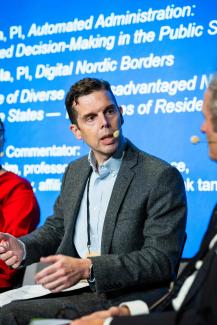
Jacob Sohlberg. Photo: Frida Lönnroos/SLS Nearly 5,000 People Interviewed
Researchers and trained interviewers conducted door-to-door interviews in randomly selected apartment buildings. They also spent time in public spaces to reach groups that spend more time outside, such as young men. This approach enabled the researchers to engage population groups that typically do not respond to questionnaires.
“Through extensive fieldwork, we have been able to reach people whose voices are rarely heard,” says Jacob Sohlberg.
The researchers examined how residents perceive their living conditions and their relationship with the rest of society, compared with the population at large.
The survey was conducted in the districts of Biskopsgården and Hammarkullen in Gothenburg, Sweden; Herredsvang and Gellerup in Aarhus, Denmark; and Kontula and Koivukylä in the Helsinki and Vantaa region of Finland. In total, approximately 4,800 people were interviewed.
Alcohol and Drug Abuse Create Insecurity
Although residents in disadvantaged areas across all the countries surveyed perceive social disorder as a problem, Finland stands out negatively on this issue. Researcher Oskar Rönnberg notes that 40 per cent of residents in Koivukylä said they would like to move within the next two to three years, compared with 20–30 per cent of residents in most other areas included in the study.
“The main reason was that residents felt unsafe because of problems related to social disorder,” says Oskar Rönnberg.
These problems include alcohol and drug abuse, as well as drug dealing within the neighbourhood.
“What should cities do to reverse this trend? The issue here is not primarily ethnic segregation or immigration, but rather social welfare and how society should address the fact that some people have fallen through the social safety net,” says Rönnberg.
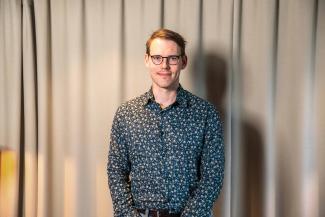
Oskar Rönnberg. Photo: Mathias Foster/SLS Different Living Conditions Within the Same Country
The comparative study shows that residents of disadvantaged neighbourhoods in all three Nordic countries perceive their circumstances as being more similar to those of residents in comparable areas abroad than to those of people living in non-disadvantaged neighbourhoods within their own country. For example, a resident of a disadvantaged area in Denmark shares many of the same experiences as someone living in a similar area in Sweden or Finland. These similarities are more pronounced than those between a disadvantaged and a non-disadvantaged neighbourhood within the same country.
“It is dramatic that such different living conditions have been created within the same country, or even within the same city,” says Sohlberg.
More information about the methodology can be found in Sociological Methods and Research, and more about differences between disadvantaged neighbourhoods in Political Geography.
Further Information
Jacob Sohlberg
Senior lecturter, University of Gothenburg
+46 70 594 13 18
jacob.sohlberg@gu.seOskar Rönnberg
Researcher in Urban Geography, University of Helsinki
+358 40 531 0893 -
2.10.2026

Research: Green Investments Divide Northern Regions
New research shows how historical colonial patterns are being repeated as global capital seeks green investment opportunities in Arctic regions in the Nordic countries. Pressure is mounting to build everything from wind farms to data centers in peripheral areas. These projects raise opposition and divide communities.
The Nordic research project Peripheral Visions: When Global Agendas Meet Nordic Energy Peripheries has examined how global agendas for the green transition affect communities in Arctic regions, which are considered key to the shift from fossil fuels to renewable energy.
The research, which focused on Greenland and northern Sweden and Finland, highlights how the energy transition is being driven by international climate policy and global capital seeking profitable investments in green energy solutions. Municipalities in the north are often presented with fully developed plans for large infrastructure or industrial projects that have been designed elsewhere, with little connection to the communities affected.
“This often leads to opposition becoming reactive and locally focused, without presenting an alternative vision of how the transition should be carried out,” says project leader Erland Mårald.
As a result, when affected groups or municipalities protest or attempt to veto proposed projects, their objections can easily be dismissed as Not In My Backyard (NIMBY) attitudes.
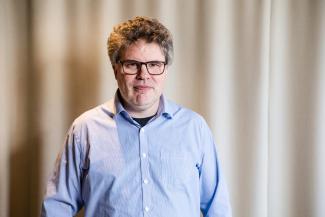
Erland Mårald. Photo: Mathias Foster/SLS Dividing Different Groups
According to the researchers, such opposition should be understood against the backdrop of a long history in which land and natural resources in northern peripheral regions have been exploited to meet needs elsewhere. National governments have, among other things, made decisions to dam rivers for energy production, and today global capital is searching for attractive green energy investment opportunities.
Mårald points out that the rapid changes created by the global financial market also make it more difficult for local communities to take a proactive role in shaping development.
“There is intense activity among interconnected financiers and industrial actors, where the focus has rapidly shifted between wind power, battery manufacturing, green steel, mining, hydrogen and, most recently, data centers. These rapid shifts make it difficult for both affected communities and local and national policymakers to keep up.”
Researcher Hanna Lempinen has, as part of the project, studied attitudes toward wind power in northern Finland and Sweden.
“One of the main reasons for opposition to wind power projects in these regions is the perception that the benefits and profits are generated elsewhere, while local communities are left to bear the negative consequences.”
Lempinen emphasizes, however, that even where protests emerge, opposition is rarely unified. On the contrary, large-scale energy projects can divide municipalities and create conflicts between supporters and opponents of the projects.
For this reason, Lempinen calls for strategic thinking from municipalities in the northern regions.
“Municipalities should develop their own energy strategies. At present, individual projects are planned and advanced according to where they happen to fall on a company’s investment list, without any overall perspective,” says Lempinen.
Not Just a Technological Issue
One of the study’s conclusions is that the energy transition is not merely a technological issue. Instead, it should be treated as a far-reaching societal transformation in which affected communities are involved from the outset in planning and decision-making processes.
At present, the focus is often on removing the “obstacles” perceived to be standing in the way of a necessary development. These obstacles may include spontaneous protests, the rights of reindeer herders, concerns raised by researchers, or democratic decisions by individual municipalities to reject projects.
“But perhaps it is precisely these ‘obstacles’ that create social legitimacy and opportunities for inclusion and regional development, while opening up alternative visions of what the transition is for and whom it is intended to benefit,” says Mårald.
Contact:
Erland Mårald
professor, Umeå University
+46 70 222 9651
erland.marald@umu.se
Hanna Lempinen
special researcher, Natural Resources Institute Finland
+358 50 527 4190
hanna.lempinen@luke.fi -
16.2.2026

Nordic Pension Funds Can Promote Sustainable Development
The capital managed by Nordic pension funds can play a significant role in driving a sustainable transition – both through the concrete effects of their investments and by sending signals to other investors. Yet, even as efforts are made to move in a more sustainable direction, pension capital continues to support unsustainable activities.
How are environmental and climate impacts considered in pension fund investments? How do pension funds respond to external demands – for example from environmental organisations or pension savers – to divest from fossil fuels? And how do sustainability officers and fund managers work with sustainability issues, and with what consequences for the future that pension capital is meant to help build? These are the questions examined by researchers in the project Fossil Free Futures – Divestment Across the Nordic Countries.
The research project is being carried out in Sweden, Denmark, and Norway, and the questions addressed intersect three major and complex areas: pension systems, climate change, and the global financial market. When global issues such as finance and climate meet national pension systems, both similarities and differences across the Nordic countries become visible – not least in how the issues are framed as political, ethical, or strictly economic.
– We have focused in particular on identifying the actors that draw attention to the issue of fossil fuels in pension capital, and studying how those who decide on or manage pension funds respond, says project leader and professor of sociology Linda Soneryd from Stockholm University.
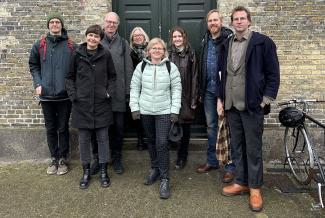
From left: Johannes Lundberg, Linda Soneryd, Göran Sundqvist, Kristin Asdal, Elena Bogdanova, Amanda Obitz Mogensen, Erlend A.T. Hermansen och Sebastian Svenberg. Foto: Gunnell Sandanger To understand the forces driving change towards sustainability, we need to understand both who is pushing for change and what obstacles remain.
In Denmark, member-based pension funds have enabled the divestment issue to be driven forward by the members themselves – the pension savers. In Sweden, the issue has been pushed forward by pension managers, discussed in parliament, and scrutinized by environmental organisations.
This can be understood as the framework of shared knowledge: how much is left to financial actors to decide, what role experts play, who has access to information, and what democratic forums are available.– It is also about the behaviour of financial actors in relation to broader climate policy. Norway has made large contributions to rainforest conservation, but in 2025 the Norwegian Oil Fund went against the advice of its own ethics council and invested in mining operations that threaten the Amazon rainforest. Such conflicts undermine public trust in decision-makers, says Soneryd.
Research on the ethical governance of the Oil Fund shows that an ethical framework can serve several functions. This is how Bård Lahn and Sebastian Svenberg, who belong to the Norwegian team in the project, explain it:
– The ethical framework has made it possible to engage actively with social and environmental issues, and it has also opened up space for criticism from the Norwegian public, who can now expect decision-makers to act in ways that are perceived as morally right.More information:
Linda Soneryd
Stockholm University
linda.soneryd@score.su.se -
30.1.2026

New Money, New Attitudes – Study Sheds Light on Elites’ Contradictory Relationship with the Nordic Welfare Model
Many individuals who have accumulated wealth in emerging sectors view the public sector as inefficient and dysfunctional. At the same time, it has provided them with opportunities to grow their own wealth.
A study entitled “Keeping New Money on Board: The New Nordic Wealth Elites and the Future of the Welfare Model”, part of the Future Challenges in the Nordic Countries research programme, examines the relationship between new economic elites and the Nordic welfare state in Finland and Sweden.
One of the key findings of the study is that a significant proportion of the new elites adopt a critical stance towards the welfare state. Their criticism is directed in particular at the inefficiency of the public sector and at the structures of social security, such as support for the unemployed or low-income groups.
– Many of those interviewed for the study believe that the public sector does not function properly. Instead, they see themselves as saviours who solve the public sector’s problems, says project leader Hanna Kuusela, Associate Professor of Sociology at the University of Jyväskylä.
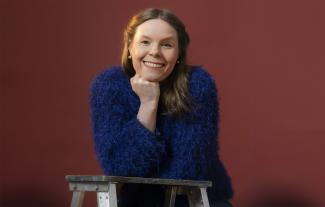
Hanna Kuusela. Image: Laura Oja The study has focused in particular on individuals who have recently accumulated wealth in the social and healthcare sector, the education sector and the technology sector. Their views have been explored through more than 70 research interviews. In addition, media materials have been used as a data source to examine how contemporary elites are portrayed or portray themselves in public debate. Public sources such as tax records, annual reports and company registers have also been utilised in the research.
However, many of the interviewees have a somewhat ambivalent relationship with the public sector, as it is often their companies’ largest client and a vital condition for their business operations.
According to the project’s preliminary findings in Finland, many young high achievers in the technology sector nevertheless stand out from the group, as many of them support the Nordic model. They are the subject of research at the University of Helsinki, where founders and executives of companies leveraging new digital technologies were interviewed. These leading figures of the new economy consider themselves to have benefited substantially from the Nordic welfare state and therefore regard its preservation as important for future generations as well.
In one of the two Finnish sub-studies, conducted at the University of Jyväskylä, the researchers interviewed around 90 further individuals, who have made large charitable donations. Their attitudes towards the Nordic social model are also often positive.
– In these people’s discourse, private philanthropy does not compete with the welfare state; rather, it is seen as part of an ethos of shared responsibility, Kuusela says.
There are some differences between the two countries in terms of the background of the interviewees, as in Sweden, the study conducted at the University of Stockholm includes individuals who have become wealthy in the education sector. In Sweden the marketization of education has created new wealthy elite groups and has been an object of broad public discussion. This new "corporate welfare elite" regard themselves as entrepreneurs who offer the Swedish school sector innovation, cost efficiency and good results in terms of education – but they remain the subject of much public critique.
– In Finland, there is currently hardly any discussion at all about opening up primary or secondary education to the market, Kuusela notes.
The research project will publish, among other outputs, the English-language book Rich Radicals, to be released later this year, which examines Finnish elites and their views on the Nordic model. Several research articles will also be published as the project approaches its conclusion.
Further information:
Hanna Kuusela
Associate Professor, University of Jyväskylä
hanna.r.kuusela@jyu.fi -
11.12.2025

Chatting Online with Students in the Evenings – Teachers’ Support Now Also Happens Out of View, Nordic Research Shows
Changes that digitalization has brought to students’ lives are greater and more striking than expected, researchers say. In particular, the interaction between teachers and students after school hours comes as a surprise.
Digitalization has led to major changes in everyday school life. This is evident from the material collected by researchers behind the project Nordic Basic Schools as Past Present and Future Sites for Solving the Challenges of Making Diverse Inclusive Knowledge-based Societies. The project focuses on four lower secondary schools in four different Nordic countries.
Although the project won’t be completed until 2027, the researchers have finished collecting material and it offers several new insights. Among other things, researchers were surprised to find that many teachers are in contact with their students via chats even after 8 p.m. This can for example involve help with various school assignments.
– This was new to us and it’s something we don’t think others have looked at much either, says Project Leader and Professor Fritjof Sahlström at the University of Helsinki.
Is help distributed equally?
Sahlström emphasizes that digitalization has brought a lot of good with it. At the same time, it brings forth new challenges, particularly when it comes to the original ambitions of equality in Nordic comprehensive schools.
– Classrooms before digitalization were special in the sense that everyone could see what was happening and whether the teacher was helping someone. There were no secrets. But with screens, it becomes silent.
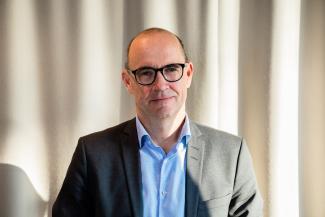
Fritjof Sahlström. Photo: Mathias Foster/Futurenordics It’s no longer clear to everyone who is helping whom. Meeting places have become fewer and less accessible.
– There is reason to suspect that some of the schools’ equality goals are not being met. This type of interaction between students and teachers may not be distributed very fairly – teachers might be more inclined to contact certain students in the evening than others.
With adults chatting with students outside school hours, there might also be a need to discuss boundaries: how much and in what way is it okay to be in contact with students late at night?
Overall, it’s clear that school and students’ spare time are increasingly intertwined today. People from one area of the student’s life are present in others.
– We have interesting documentation, like screenshots, showing how students might chat with grandparents at school, for instance, and then use school contact apps late at night. This is a significant and clear change, says Sahlström.
Enlightening Walk-Along Interviews
The research project consists of three sub-studies. In addition to examining what digitalization has meant for today’s students, researchers have looked at educational history: how Nordic comprehensive schools of this type came to be. They have also looked at what significance the comprehensive school had for students who are now in their fifties. Researchers conducted walk-along interviews, during which they walked around the school and its surroundings with former students.
– We can see that the school’s significance as a social space has been enormous for these students. This became very clear when they reflected on what the school meant for who they were and who they became.
Both attending school as well as how the school was organized – for example, the placement of corridors and special education classrooms – was important.
The results of the project will be compiled into a book. The book will be published in 2027.
More information:
Project Leader Fritjof Sahlström
Professor in pedagogy at University of Helsinki
fritjof.sahlstrom@helsinki.fi